
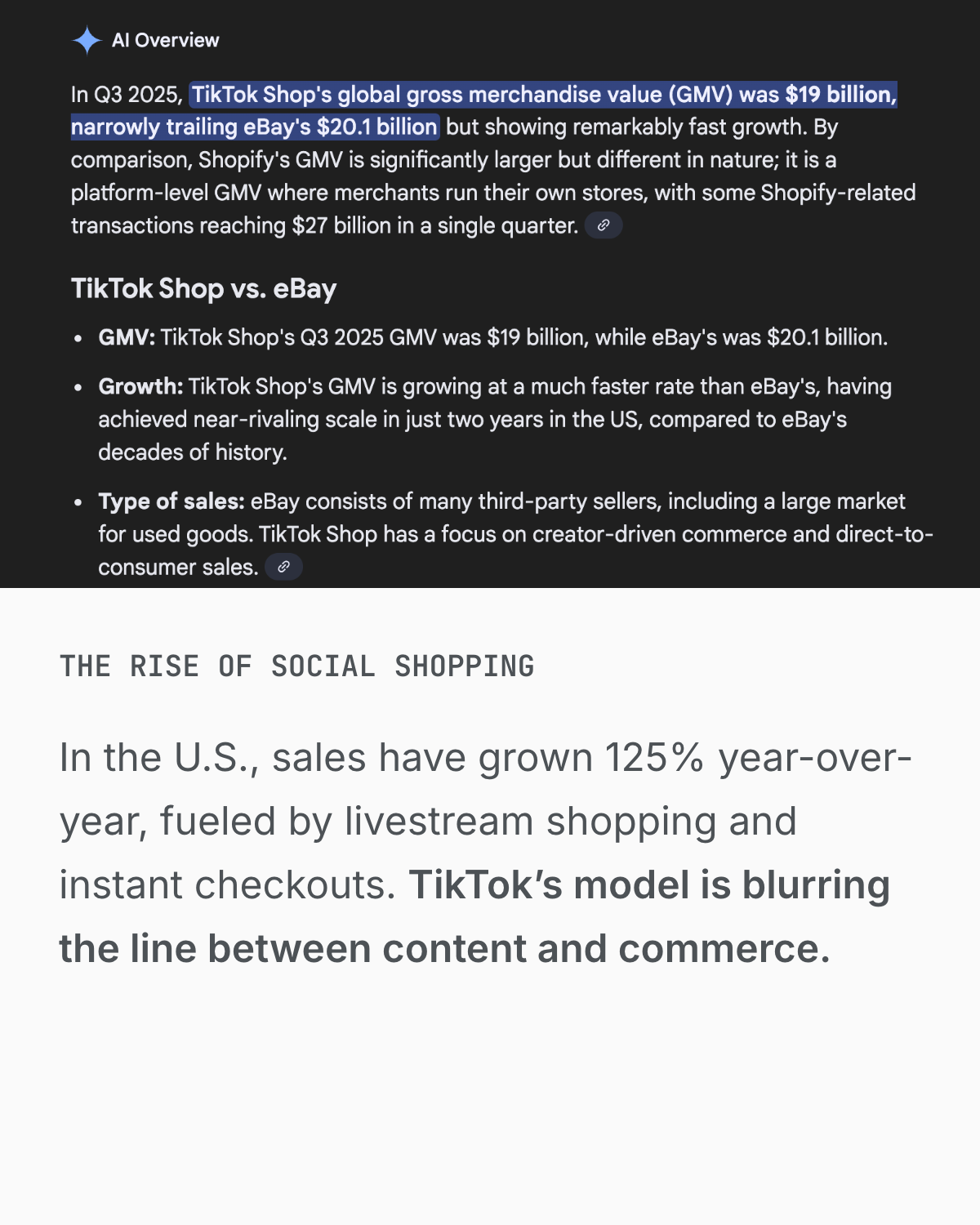
TikTok Shop Hits $19B in GMV, Now Rivals eBay


The Timeline: A Side-by-Side Comparison
This is where the difference becomes staggering.
- eBay: Founded in 1995, it took ~28 years to reach a ~$20 billion GMV run rate. Its growth was steady, built on the gradual adoption of internet commerce, building trust between strangers, and expanding categories. It was a pioneer that built the market brick by brick.
- TikTok Shop: Launched in the US in November 2022. It reached a $20 billion GMV run rate by the end of 2024. That's roughly 2 years to achieve what took eBay nearly three decades.
To put it another way, TikTok Shop achieved in 24 months what took eBay 336 months. The velocity is almost incomprehensible in traditional retail terms.
The "How": The Engine Behind the Hyperspeed Growth
TikTok Shop didn't just build a marketplace; it plugged a marketplace directly into the world's most powerful discovery and entertainment engine. This is the core difference.
1. The Paradigm Shift: "Discovery Commerce" vs. "Search Commerce"
- eBay (Search Commerce): You go to eBay with intent. You know what you want—a specific collectible, a pair of shoes, a used camera. You type it into the search bar, compare listings, and buy. The model is demand-driven and transactional.
- TikTok Shop (Discovery Commerce): You open TikTok for entertainment. You have no shopping intent. You're watching funny skits, dance trends, and cooking videos. Suddenly, you see a creator demonstrating a gadget you never knew existed, a dress that fits perfectly, or a skincare product with stunning results. You can buy it instantly, without leaving the app. The model is impulse-driven and inspirational.
This shift from "I want to buy" to "I didn't know I wanted this until I saw it" is the fundamental rocket fuel.
2. The Seamless, Addictive User Experience
The frictionless "in-app" experience is critical:
- No App Switching: On Instagram or YouTube, you often see a product, then have to open a browser, search for the website, find the product, and check out. At each step, you can lose the customer.
- Integrated Checkout: TikTok Shop keeps you locked in. The "Add to Cart" and "Buy Now" buttons are right on the video. Payment info is saved. It's a one-click impulse buy.
3. The Power of the Algorithm and Creators
TikTok's "For You Page" (FYP) algorithm is the most powerful distribution engine in social media.
- Hyper-Targeted: It learns your interests with frightening accuracy. If you watch gardening videos, it will show you creators selling unique planters or tools.
- Viral Potential: A product can go from obscurity to selling tens of thousands of units in days because a video goes viral. This creates "TikTok Made Me Buy It" phenomena that are marketer's dreams.
- Creator-Driven Sales: TikTok Shop turned its entire creator base into a massive, decentralized sales force. Through the "Affiliate" program, creators earn commissions by promoting products in their content. This means brands don't just run ads; they have thousands of influencers organically pushing their products.
4. Aggressive Subsidization and Incentives
TikTok is not yet profitable from Shop and is burning cash to win the market, just like Amazon did in its early days.
- Seller Incentives: They offered massive subsidies on shipping, fees, and provided matching funds for promotions to attract sellers.
- Buyer Incentives: "New User" coupons, free shipping vouchers, and flash sales created a low-risk environment for first-time buyers, encouraging trial.
The Nuances and Challenges
While the growth is staggering, it's important to view it with context:
- The "GMV" Caveat: GMV (Gross Merchandise Volume) is the total value of goods sold, before refunds, returns, and cancellations. TikTok Shop has a significantly higher return rate than established players like Amazon or eBay, partly driven by impulse buys that buyers later regret. Their Net Merchandise Value would be lower.
- Seller Experience is Still Maturing: Sellers report glitchy interfaces, confusing policies, and a heavy reliance on dealing with returns and refunds. It's not as polished as selling on Amazon or eBay.
- Cultural Integration: The blend of entertainment and commerce can feel jarring to some users. There's a risk of "platform fatigue" if the shopping experience becomes too aggressive and spoils the fun.
What This Means
The rise of TikTok Shop signals a permanent shift in the e-commerce landscape.
- The End of the "Storefront" Mentality: For brands, simply having a website is no longer enough. The new battleground is discovery, and that means having a strategy for entertainment-based platforms like TikTok and Temu.
- The Power of Video: Static photos and text listings are no longer the gold standard. Demonstrative, engaging video is now the most powerful sales tool.
- Legacy Platforms are Scrambling: Both YouTube ("YouTube Shopping") and Instagram ("Instagram Shopping") have similar features, but neither has managed to integrate commerce as seamlessly or as virally as TikTok. Amazon has even launched a "Inspire" feed, a direct copy of the TikTok FYP, showing they see the threat.