
Rich Results Increase SERP Performance
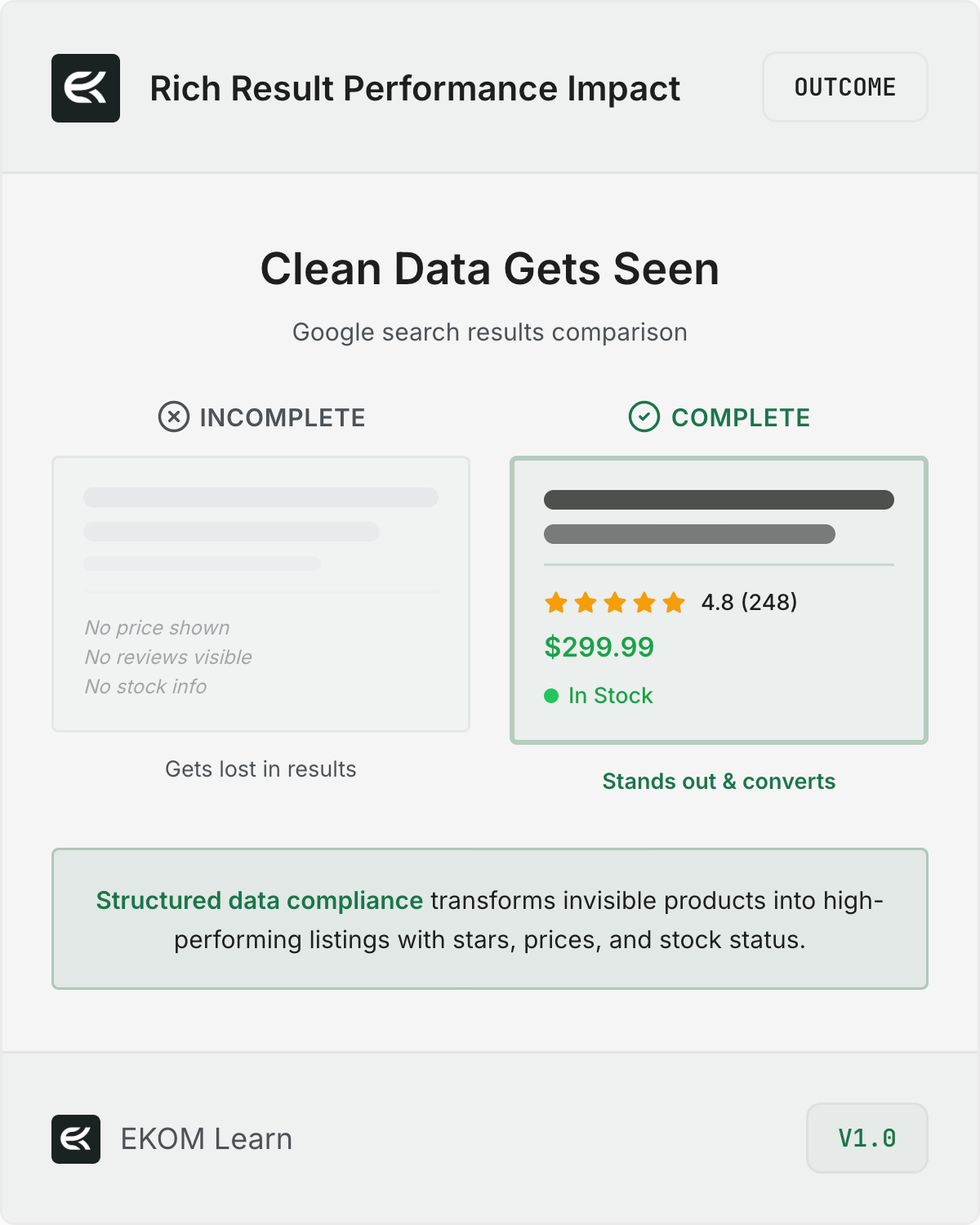

Rich Result Increase SERP Performance
Abstract
This analysis examines how structured data accuracy affects product visibility and engagement within search engine results pages (SERPs). Data collected across e-commerce listings demonstrates a consistent performance gap between products with complete schema markup and those without. The findings suggest that compliance with structured data standards directly contributes to improved click-through rates (CTR), higher search placement, and stronger user trust signals.
Methodology
Search performance was compared between two listing types:
- Basic Listings – plain text entries without validated schema fields.
- Rich Results – listings with fully populated and verified product schema, including price, availability, rating, and review count.
Each listing type was observed across identical product categories and timeframes. Key metrics included impressions, CTR, and average position.
Google’s Search Central guidelines were used as a reference for structured data compliance. Schema.org product markup was validated using the Rich Results Test tool to confirm eligibility.
Findings
Listings with complete schema markup consistently outperformed basic listings across all measured dimensions:
- Visibility: Rich Results appeared in a greater share of relevant queries.
- Engagement: CTR increased by up to 20–35% when review stars and pricing data were visible.
- User Experience: Shoppers were more likely to click listings that surfaced trust indicators (ratings, stock status, verified pricing).
Google’s algorithms reward listings that can be parsed with high confidence. Accurate structured data allows this parsing to occur more efficiently, improving ranking stability and eligibility for enhanced presentation features.
Conclusion
Structured data compliance is a measurable driver of SERP performance. Rich Results not only make listings more informative but also signal trustworthiness and completeness to both users and algorithms.
In practice, maintaining valid schema markup functions as a lightweight optimization layer — one that strengthens visibility, reinforces credibility, and improves conversion potential without altering the underlying content.
Clean data earns richer results.