
Metadata Accuracy → Search Visibility

Consistency Builds Trust
Search and AI systems work a lot like people — they reward consistency and clarity.
When you meet someone who tells one story here and a different story there, you hesitate to trust them. Platforms behave the same way. They’re constantly checking your product data for signals of reliability.
If your titles, descriptions, and schema all line up, the algorithm can see that your data is stable and trustworthy. But if one field says “black leather office chair” and another says “ergonomic mesh chair,” it starts to question which version is true. That uncertainty makes your products harder to surface.
Trust Defines Visibility
Modern search and recommendation systems don’t “rank” the way they used to — they evaluate.
They look for patterns of consistency, completeness, and structure that prove your catalog is ready for visibility.
When metadata is clean and consistent, it sends three clear trust signals:
- You’re transparent — every field is filled, nothing is hidden.
- You’re structured — data is predictable and easy to read.
- You’re reliable — your product details stay consistent across channels.
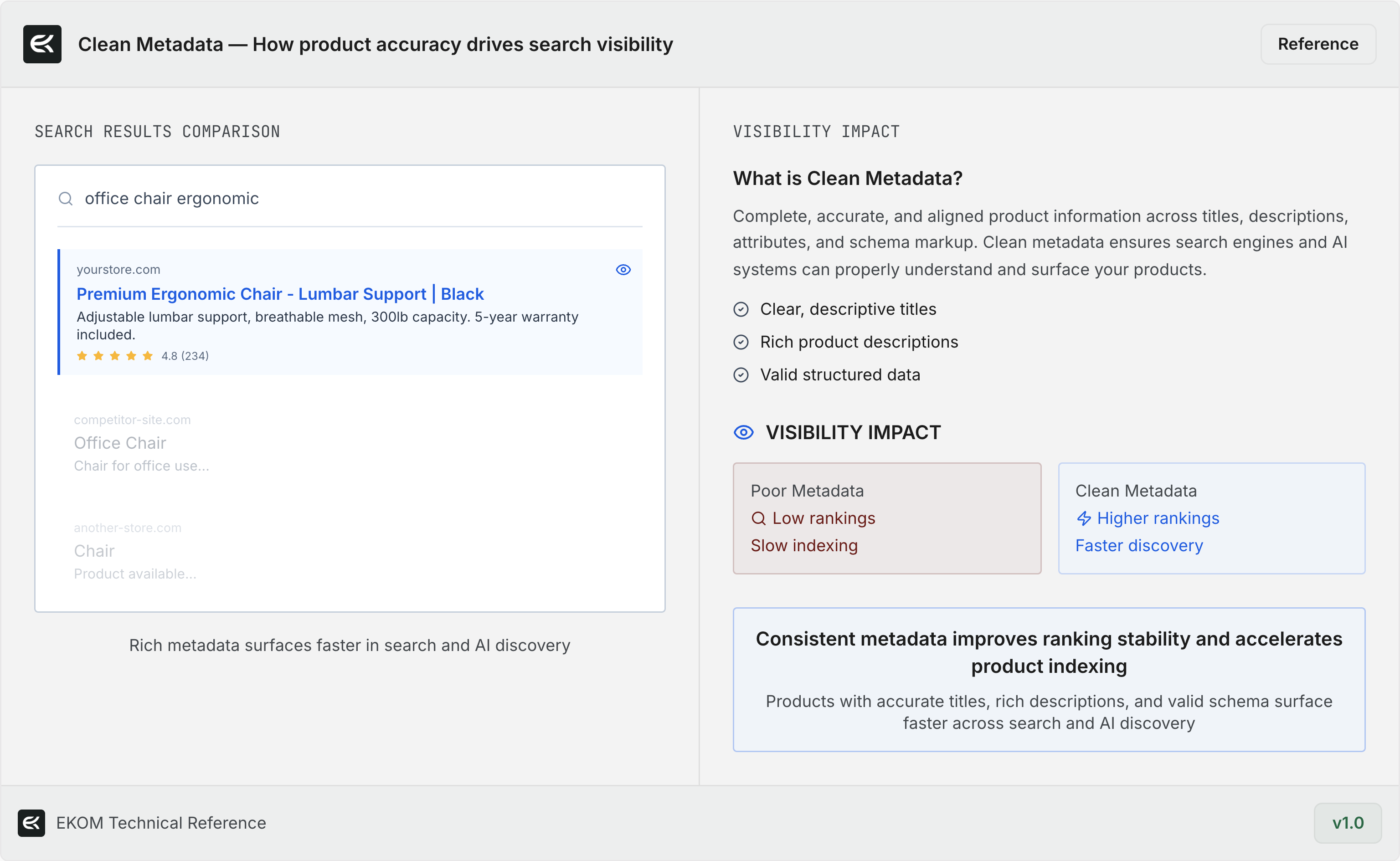
Platforms reward that kind of reliability with faster indexing, higher rankings, and better placement in AI discovery results.
Clean Metadata Wins
Clean metadata doesn’t just look organized — it feels trustworthy to the systems that decide what gets seen.
When every attribute supports the same story, algorithms can confidently match your products with the right searches and audiences. That trust compounds over time: your listings get indexed faster, rank higher, and stay more stable through algorithm updates.
In short, consistency isn’t just about structure — it’s about earning trust at scale.